Toronto Metropolitan University (formerly Ryerson University)
Clean water, healthy cities, evidence you can use.
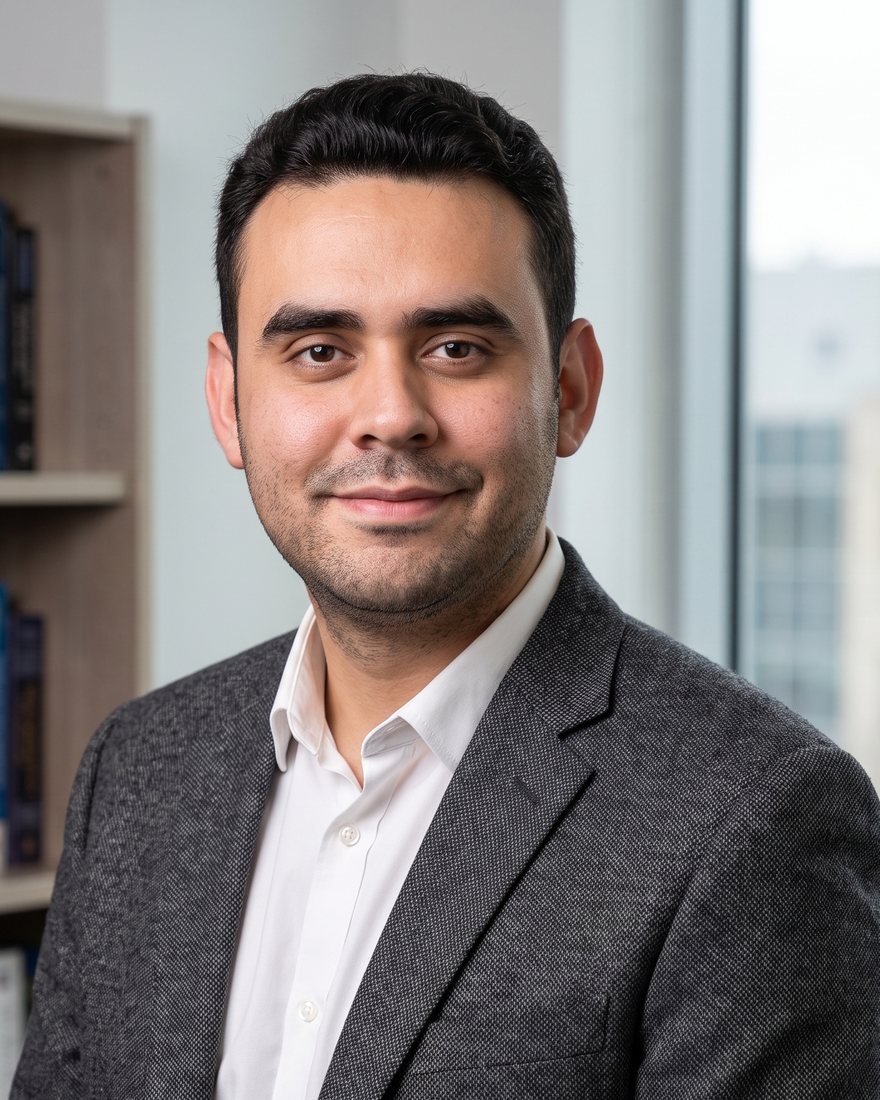
Dr. Ciro Bustillo-Lecompte PhD · PEng · EP · Queen Elizabeth Scholar
Environmental engineer and public health educator. My research spans advanced oxidation and photocatalysis, industrial wastewater, decentralized drinking water and remote-sensing risk mapping.
Field-Weighted Citation Impact (OpenAlex): 1.00 is the world average for papers of the same field, year and type.
Syncing with ORCID & OpenAlex…
Journal of Environmental ManagementJournal of Cleaner ProductionCatalystsProcessesMDPIIntechOpenGeoscience FrontiersWater Air & Soil PollutionUtilities PolicyJournal of Hazardous MaterialsJournal of Environmental ManagementJournal of Cleaner ProductionCatalystsProcessesMDPIIntechOpenGeoscience FrontiersWater Air & Soil PollutionUtilities PolicyJournal of Hazardous Materials
About
I am Assistant Director, Curriculum Management and Academic Engagement in the Office of the Registrar and an Adjunct Professor in the School of Occupational and Public Health at Toronto Metropolitan University (formerly Ryerson University).
My training spans civil, environmental and chemical engineering and occupational and public health. I have led cross-functional, multi-site teams on noise control and on air, soil and water quality management, and worked on wastewater treatment in the petrochemical, agricultural and food-processing sectors.
I am committed to equity, diversity and inclusion in teaching, research and academic administration.
Affiliate Fellow, CERC in Health Equity & Community WellbeingQueen Elizabeth II Diamond Jubilee Advanced ScholarDean's Teaching Award 2024 & 2021Sue Williams Excellence in Teaching Award 2021PEng · Professional Engineers OntarioEP · ECO Canada
Research
⚗
Advanced oxidation & photocatalysis
UV/H₂O₂, TiO₂ (doped and composite), solar photocatalysis and slurry-photoreactor scale-up for recalcitrant organics, dyes, pharmaceuticals, BTEX and cyanide. Includes the book Advanced Oxidation Processes - Applications, Trends, and Prospects (IntechOpen, 2020) and a chapter on slurry-photoreactor scale-up.
🏭
Industrial wastewater
Slaughterhouse and petroleum wastewater: combined biological + advanced-oxidation treatment, biogas generation and cost-effectiveness. Includes a widely cited review of the meat-processing sector.
🚰
Decentralized drinking water
Solar disinfection, sequential purification and point-of-use filters for dispersed rural households and developing cities.
🛰
Remote sensing & risk mapping
Satellite (WorldView-3) and machine-learning detection of asbestos-cement roofs for affordable hazard mapping.
🌫
Air, noise & urban health
Ultrafine particles (overview, 280+ citations), traffic-noise modelling and the book Urban Pollution.
🎓
Public health & education
Public health inspector oversight of small drinking water systems, digital literacy and equitable access to care.
Research areas
Business technology managementData analytics & decision systemsResponsible AI & remote sensingTechnology governance & operational qualitySustainability & health equityInclusive digital participation
Research topics (OpenAlex, auto-updated)
Teaching, awards & service
Teaching recognition
Dean's Teaching Award, Faculty of Community Services, Toronto Metropolitan University, 2024
Dean's Teaching Award, Faculty of Community Services, Toronto Metropolitan University, 2021
Sue Williams Excellence in Teaching Award, Toronto Metropolitan University, 2021
Higher Education Teaching Certificate, Derek Bok Center, Harvard University, 2021
Queen Elizabeth Scholars & funding
Queen Elizabeth II Diamond Jubilee Advanced Scholars Program, 2023: $350,000 over three years, for research, travel, publication and exchange activities
Queen Elizabeth II Diamond Jubilee Advanced Scholars Program, 2016: $500,000 over five years, for international research and capacity-building
COLCIENCIAS Young Professionals Grant, 2014: $20,000 over two years
Ontario Trillium Scholarship, 2012: $160,000 over four years
Honours & credentials
Governor General's Gold Medal nominee, 2012 and 2016
Dennis Mock Student Leadership Award, Toronto Metropolitan University, 2016
On-Campus Student Leader Award, Toronto Metropolitan University, 2016
Professional Engineer (PEng), Professional Engineers Ontario, 2017 to present
Environmental Professional (EP), ECO Canada, 2018 to present
Fraternal Member, Canadian Institute of Public Health Inspectors
Editorial & peer-review service
Associate Editor, Frontiers in Environmental Engineering, 2023 to present
Associate Editor, Frontiers in Public Health, 2022 to present
Academic Editor, IntechOpen, 2019 to present
Guest editor of special issues on catalysts, photocatalysis, advanced oxidation, environmental technology and public health
Peer reviewer for international journals in environmental management, sustainability, technology, public health and engineering
Graduate supervision
PhD, 2024 to present: drinking-water systems in dispersed communities in Northern Colombia (co-supervised with Prof. Mehrab Mehrvar)
MSc, 2025 to present: access to primary care for trans and gender-diverse communities (co-supervised with Prof. Karen Soldatic)
MSc, 2023 to 2025: digital literacy and digital research participation among disabled women and gender-diverse people (co-supervised with Prof. Karen Soldatic)
MSc, 2022 to 2025: operational barriers in small drinking-water systems
Supervision includes students jointly supervised with Professors Mehrab Mehrvar and Edgar Eduardo Quiñones-Bolaños.
Courses taught
Toronto Metropolitan University, Seneca Polytechnic and Universidad de Cartagena.
Risk Management (graduate, Universidad de Cartagena)
Environmental Management (Seneca Polytechnic)
Disability Management · Safety Evaluation · Safety Control Methods
Occupational Health, Safety and Environment Management Systems
Full list
Unit Operations and Processes in Environmental Engineering (graduate, 2017)
Pollution Prevention and Control in Environmental Engineering (graduate, 2017)
Housing and Built Environments (2025)
Accident Theory (2016, 2022, 2024)
Wastewater Treatment Systems (2023)
Training and Development (Seneca Polytechnic, 2022 to 2023)
Air Quality (2022)
Systems Management I (2020 to 2021)
Introductory Toxicology (2017, 2020 to 2021) and Advanced Toxicology (2018 to 2021)
Applied Ecology (2018)
Memberships: Professional Engineers Ontario · Environmental Careers Organization of Canada · Canadian Institute of Public Health Inspectors · International Water Association · Canadian Society for Chemical Engineering. Languages: English and Spanish.
In pictures
Moments from teaching, research and professional milestones. Click a photo to enlarge it.
Professional Engineer (PEng), Professional Engineers OntarioPhD convocation, 2016Professional Engineers Ontario licensing ceremonyRyerson Awards 2021, Celebrating ExcellenceDean's Teaching Award certificate, April 2021Ryerson student awards ceremonyDennis Mock Student Leadership Award ceremony, 2016Dennis Mock Student Leadership Award, March 2016
Publications
Generated automatically from my ORCID record and OpenAlex (aggregating Crossref, Scopus-indexed and PubMed metadata). New DOI-registered work appears here without manual editing. Click Cite on any item for APA, BibTeX or RIS.
Research insights computed from my publication record
Citations per year
Where I publish
Collaboration network top co-authors by shared papers · hover for detail
Topic timeline papers per theme and year, matched on titles
Research tools
Small calculators built around the methods in my papers. They use standard textbook equations, run entirely in your browser, and are for education and quick estimates, not design or compliance.
k depends on the organism and water quality; enter a measured or literature value for your case. 1 mW/cm² × 1 s = 1 mJ/cm².
Sum of sources L = 10·log₁₀ Σ 10^(Lᵢ/10) · distance (point source) L₂ = L₁ - 20·log₁₀(r₂/r₁)
Set an unused source to 0 dB to exclude it. Free-field geometric spreading only: no ground, barrier or atmospheric effects.
For classifying roofs from satellite imagery (for example asbestos-cement vs other roofs), from a 2 x 2 confusion matrix: overall accuracy (TP+TN)/N · precision TP/(TP+FP) · recall TP/(TP+FN) · F1 · Cohen's kappa
Standard accuracy-assessment metrics used to compare supervised and unsupervised classifiers. The defaults are illustrative numbers, not results from my papers. Precision is also called user's accuracy and recall producer's accuracy.
Area A = pixels × GSD² · normalized difference index ND = (A - B) / (A + B)
1.24 m is the nominal multispectral pixel size of WorldView-3 at nadir; check the metadata of your own image product, because off-nadir views and resampling change it. With A = NIR and B = red this gives NDVI.